

How to Start Bodybuilding at 65: A Beginner's Guide

Table of Contents
Why Bodybuilding at 65 Is More Achievable Than You Think
Get Medical Clearance Before You Touch a Weight
Strength Training for Older Adults: What Changes After 60
Muscle Loss, Recovery, and Realistic Timelines
Beginner Weightlifting After 60: Your First Eight Weeks
The Weekly Schedule
The Full-Body Workout (Use Every Session)
How to Progress Without Guessing
What Week 1 Actually Looks Like
An Older Adult Strength Training Routine You Can Follow
Modifications for Joint Pain, Balance, and Limited Equipment
Nutrition for Building Muscle After 60
How Much Protein and When
What 25-35 Grams Looks Like at a Meal
Calories, Hydration, and Appetite
Supplements Are Optional
From First Rep to First Stage: Competing in Masters Bodybuilding
Conclusion
Frequently Asked Questions
Last Updated: October 21, 2026
Why Bodybuilding at 65 Is More Achievable Than You Think
Here's the truth most fitness articles bury: muscle responds to training at 65 the same way it does at 35. This guide from WPF USA covers exactly how to start bodybuilding at 65, from your first medical check to your first competition.
The science backs this up. According to the CDC's physical activity guidance for older adults, adults 65 and older should do muscle-strengthening activities at least two days a week.
What changes after 60 is recovery speed and joint tolerance. What doesn't change is your body's ability to add muscle. Below, we'll show you exactly how to build a plan around those realities, not against them.
Key Takeaway You don't need to train like a 25-year-old to build real muscle at 65. You need to train consistently, safely, and with a plan that respects your recovery.
Get Medical Clearance Before You Touch a Weight
Talk to your doctor before your first workout. This is not a legal formality. It's how you find out which movements are safe for your heart, joints, and any conditions you manage.
Bring a short list to the appointment:
Any heart condition, high blood pressure, or prior surgery
Joint replacements, arthritis, or chronic back pain
Medications that affect heart rate or balance
Warning signs to watch for, like chest pain or dizziness
Ask your doctor one direct question: "Are there any lifts or intensity levels I should avoid?" Their answer shapes your entire program.
Watch Out Skipping this step is the most common mistake beginners make. Pushing through chest pain or dizziness during a lift can turn a manageable condition into an emergency. Get cleared first, then train hard.
Strength Training for Older Adults: What Changes After 60
Strength training for older adults works, but the rules shift. Muscles still grow. Recovery just takes longer, and joints need more warm-up before heavy work.
Three things change most after 60:
Recovery time. You may need 48-72 hours between hard sessions on the same muscle group.
Joint tolerance. Lighter weights with perfect form beat heavy weights with sloppy form.
Balance and stability. Single-leg work and core training become non-negotiable, not optional.
The payoff is real. The National Institute on Aging's exercise guide notes that strength training helps older adults maintain muscle mass, improve balance, and reduce fall risk.
Muscle Loss, Recovery, and Realistic Timelines
Muscle loss with age is real, but it's not destiny. Many people lose muscle because they stop challenging their muscles, not because their body refuses to build it.
Realistic expectations matter here. Most beginners see visible strength gains in 8-12 weeks. Noticeable muscle size takes longer, often 3-6 months of consistent training.
Pro Tip Track strength, not just the mirror. If your dumbbell row went from 15 to 25 pounds in eight weeks, that's real muscle-building progress, even if you can't see it yet.
Beginner Weightlifting After 60: Your First Eight Weeks
Beginner weightlifting after 60 should start simple. Two full-body sessions per week beat four complicated split routines for a new lifter. The plan below is a complete, phased schedule you can print and follow, not a list of exercises to figure out on your own.
The Weekly Schedule
Train on non-consecutive days, such as Tuesday and Friday. Walk or do light mobility work on the other days. Rest completely at least one day per week.
Week | Sessions per Week | Focus | Sets x Reps | Rest Between Sets |
1-2 | 2 | Learn the movements with body weight and light dumbbells | 2 x 10-12 | 90 sec |
3-4 | 2 | Add resistance with dumbbells or bands | 2-3 x 10-12 | 90 sec |
5-6 | 2-3 | Build consistency; add a third session if recovery feels good | 3 x 8-12 | 60-90 sec |
7-8 | 3 | Test and adjust; push closer to your limit | 3 x 8-10 | 60-90 sec |
The Full-Body Workout (Use Every Session)
Perform these five movements in order. Each session should take 30-40 minutes including warm-up.
Squat pattern: Chair squats (weeks 1-2), then goblet squats with a light dumbbell (weeks 3-8). 2-3 sets.
Hinge pattern: Glute bridges (weeks 1-4), then light Romanian deadlifts with dumbbells (weeks 5-8). 2-3 sets.
Push: Wall push-ups (weeks 1-2), incline push-ups on a counter (weeks 3-4), then incline push-ups on a bench or chest press (weeks 5-8). 2-3 sets.
Pull: Light dumbbell rows or band rows. 2-3 sets.
Core/carry: Dead bugs (weeks 1-4), then farmer carries with light dumbbells (weeks 5-8). 2-3 sets.
How to Progress Without Guessing
Progressive overload means adding a little more over time: more weight, more reps, or better control. It does not mean maxing out every session. Use these rules:
Add weight when you can complete all prescribed sets and reps with two reps left in the tank on the last set.
Add reps first, then weight. If your target is 3 x 10 and you hit 3 x 12 with good form, increase the weight by 2-5 pounds at the next session.
Small jumps only. Two to five pounds is a meaningful increase for a beginner at 65. Jumping 20 pounds because it feels easy is how form breaks down.
Deload if needed. If a joint aches for more than a few days or your energy drops, repeat the previous week's weights instead of pushing forward.
Pro Tip Log every session, exercise, weight, sets, reps, and how you felt. A simple notebook or phone note is enough. Without a log, you cannot tell whether you are progressing or just repeating.

What Week 1 Actually Looks Like
If you are starting from zero, do this in your first session:
5 minutes of walking or marching in place
2 sets of 10 chair squats
2 sets of 10 glute bridges
2 sets of 10 wall push-ups
That is a complete workout. It will feel easy, that is the point. Weeks 1-2 are for learning movement patterns, not for exhausting yourself.
An Older Adult Strength Training Routine You Can Follow
An older adult strength training routine should hit every major muscle group, twice per week. Here's a simple full-body template:
Squat pattern: Chair squats or goblet squats, 3 sets
Hinge pattern: Glute bridges or light Romanian deadlifts, 3 sets
Push: Incline push-ups or chest press, 3 sets
Pull: Dumbbell rows or band rows, 3 sets
Carry or core: Farmer carries or dead bugs, 2-3 sets
Rest 48 hours between sessions. Walk on off days. That's it.
Modifications for Joint Pain, Balance, and Limited Equipment
Joint pain doesn't mean stopping. It means adjusting. Swap barbell squats for chair squats. Use resistance bands instead of dumbbells if you train at home.
For balance, hold a sturdy chair during single-leg work. For shoulder issues, use neutral-grip presses. For knee pain, limit squat depth to what feels comfortable.
Best For Home trainees with limited equipment: a set of resistance bands, one pair of adjustable dumbbells, and a sturdy chair cover nearly every movement in this program.
Nutrition for Building Muscle After 60
Nutrition for building muscle after 60 comes down to three priorities: enough protein, enough calories, and enough hydration. The practical challenge is that appetite often declines with age, so hitting protein targets takes planning, not just intention.
How Much Protein and When
A common target practitioners use for older adults building muscle is roughly 1.2 to 1.6 grams of protein per kilogram of body weight per day, higher than the general adult minimum because aging muscles are less efficient at using protein. For a 180-pound adult, that is roughly 98 to 130 grams per day.
A simple per-meal target: 25 to 35 grams of protein at breakfast, lunch, and dinner.
What 25-35 Grams Looks Like at a Meal
Breakfast: 3 eggs plus 1 cup of Greek yogurt (about 30 grams)
Lunch: 4 ounces of chicken or canned tuna plus a cup of beans (about 35 grams)
Dinner: 5 ounces of salmon or lean beef (about 35 grams)
Snack: A protein shake with milk, or cottage cheese with fruit (about 25 grams)
You do not need supplements, but a protein shake is a practical tool if appetite is low or chewing is difficult.
Calories, Hydration, and Appetite
Do not cut calories aggressively if muscle gain is the goal. Undereating slows muscle-building and increases fatigue.
Drink water throughout the day, not just around training. Thirst signals weaken with age, so set a reminder if needed.
If appetite is low, eat protein first at each meal, use smaller more frequent meals, and choose nutrient-dense foods like eggs, dairy, fish, and beans over low-calorie fillers.
If you have dietary restrictions, lactose intolerance, kidney disease, or a vegetarian diet, ask your doctor or a registered dietitian to help set a protein target that fits your health needs. Do not guess.
Watch Out If you have kidney disease or are on a protein-restricted diet for a medical condition, do not increase protein without talking to your doctor first. The targets above are general guidance for healthy older adults, not medical advice.
Supplements Are Optional
Whole foods should do the heavy lifting. Creatine monohydrate is one of the few supplements with strong evidence for supporting strength in older adults, but check with your doctor before starting it, especially if you have kidney concerns. Everything else is optional.
From First Rep to First Stage: Competing in Masters Bodybuilding
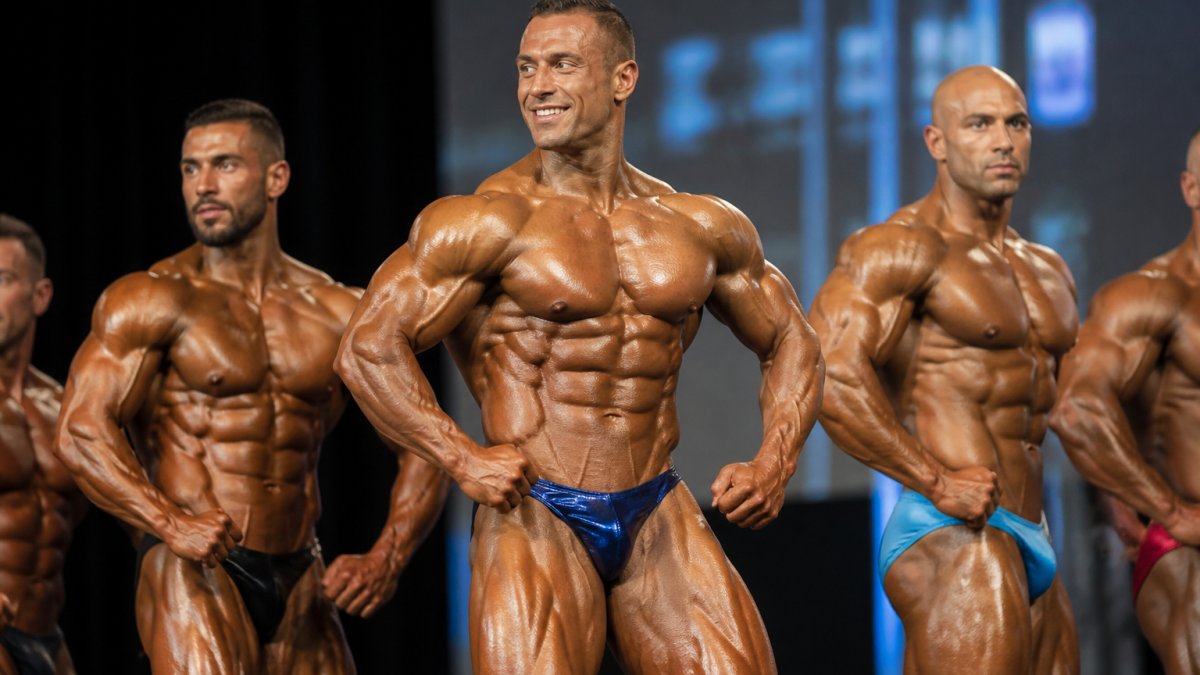
Competing is a realistic goal, not a fantasy. Masters divisions exist specifically for athletes 65 and older, which means you compete against peers, not 25-year-olds.
The pathway usually looks like this:
Train consistently for 12-18 months before considering a show
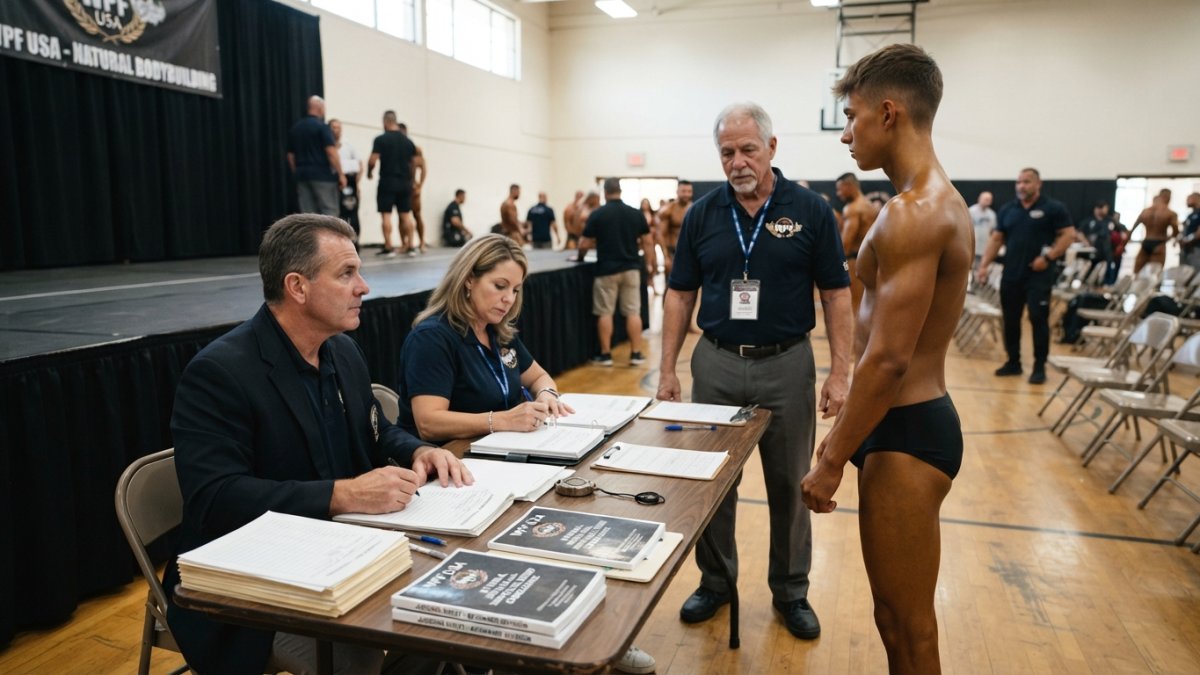
Attend a local competition as a spectator first
Choose a federation with clear age-based categories
Prepare with a coach who understands masters competitors
Enter a local show, then aim for larger events
WPF USA offers competition categories from pre-teens through Grand Masters 65+, plus pathways to international competition. That structure matters for anyone wondering how to start bodybuilding at 65 with a real competitive future, not just a gym habit.
Conclusion
Starting later doesn't mean starting smaller. The challenge is doing it right: get cleared, train smart, eat enough protein, and give your body the recovery it needs.
WPF USA supports athletes at every stage, with age-appropriate categories, Grand Masters 65+ divisions, and pathways from local shows to international competition.
Get started with WPF USA and turn your first rep into your first stage.
Frequently Asked Questions
Can you start bodybuilding at 65?
Yes. Muscle responds to resistance training at any age, and adults over 65 can build meaningful muscle mass and strength with a structured program. The key is starting conservatively, getting medical clearance first, and progressing gradually. Most beginners see noticeable strength gains within 8 to 12 weeks of consistent twice-per-week training. Bodybuilding at 65 is less about chasing a stage-ready physique in a few months and more about building a foundation over a year or more, with recovery and joint health treated as priorities alongside muscle development.
How often should a 65-year-old beginner lift weights?
Start with two full-body strength training sessions per week, spaced at least 48 hours apart. This frequency gives older adults enough stimulus to build muscle while leaving time for recovery, which slows with age. After 8 to 12 weeks, you can add a third session if joints and sleep are holding up well. Keep each session to 45-60 minutes, covering major muscle groups with 2-3 sets per exercise. Consistency across months matters far more than training volume in any single week.
Should you talk to a doctor before starting bodybuilding at 65?
Yes, and this step is not optional. Ask your physician about blood pressure, heart health, bone density, and any chronic conditions that affect exercise. Mention joint issues, prior injuries, and medications that influence balance or fatigue. If you have cardiovascular disease, diabetes, or osteoporosis, ask for specific restrictions. A clearance visit also gives you a baseline for tracking progress. Bring a written summary of your planned routine so your doctor can flag anything that needs adjusting before you begin.
Can you compete in bodybuilding after age 65?
Yes. Federations like WPF USA offer Grand Masters categories for competitors 65 and older, so you are not stepping on stage against 30-year-olds. A realistic path is 12 to 24 months of consistent training before your first show, focusing on muscle development, conditioning, and posing practice. Start by attending a local event as a spectator, then enter a novice or Masters division when your physique and confidence are ready. Competition is optional, but the category structure exists specifically for athletes your age.
Subscribe

Comments