

Men's Physique Competition Categories Explained

Quick Summary
Physique competition categories for men fall into two groups: those that judge muscle mass and full-body development, and those that judge a leaner, more proportioned look. WPF USA offers divisions such as Men's Physique, Classic Physique, and Open Bodybuilding, plus age groups from teen to Grand Masters 65+.
Men's Physique judges a lean, proportioned look with a V-taper and smaller size.
Classic Physique rewards a muscular, symmetrical build with a defined waist.
Open Bodybuilding features the largest physiques with no weight cap.
Height and weight limits vary by federation and event, so check the current rulebook.
Build a full budget before registering, since hidden costs like tanning and attire add up.
Table of Contents
Men's Physique Competition Categories Explained
Last Updated: October 29, 2026
Men's Bodybuilding Divisions at a Glance
Choosing a physique competition category for men is the first decision that shapes your whole show prep, so review the physique competition categories before you begin training. WPF USA organizes competitions for athletes of every age, from youth categories up to Grand Masters 65+. Knowing where you fit keeps you from training for the wrong look.
Most men's categories fall into two groups. The first group judges muscle mass, conditioning, and full-body development. The second group judges a leaner, more proportioned look with less emphasis on size. Each division has its own rules for posing, attire, and height or weight limits.
Here's the quick version:
Men's Physique: Lean, proportioned look with a V-taper and smaller size
Classic Physique: Muscular, symmetrical build with defined waist
Open Bodybuilding: The largest, most muscular physiques with no weight cap
Age divisions: Teen, junior, novice, and masters groups compete separately
Height and weight classes: Used in several divisions to keep matchups fair
Watch out: Many first-timers enter the wrong division because they focus on their size rather than their proportions. Check the rulebook before you commit to a category.
Men's Physique Division Criteria and How Judges Score
Judges compare athletes side by side during each round. They rank the strongest proportions highest and penalize sloppy posing or poor conditioning. Scores come from their overall impression of the stage presentation.
Judging Criteria and Aesthetics
Aesthetics is the core of the men's physique standard. Judges want a V-taper, meaning wide shoulders that narrow into a small waist. Muscle should look full but not bulky. Balance across the chest, back, arms, and legs counts for more than any single body part.
Conditioning also matters. Judges want visible muscle definition without looking drained. Skin should look healthy and smooth under stage lights.
Mandatory Poses and Transitions
Men's physique athletes perform a set of required poses so judges can compare physiques evenly. Your transitions between poses should look smooth and controlled. Clumsy movement lowers your score even when your physique is strong.
Practice each pose until it feels natural. Earn the mandatory poses with coaching on posing routines, music, and stage demeanor. Film yourself often and check the angles. Good posing shows off your best lines, and it also hides weak areas.
Height and Weight Limits by Division
Height and weight limits decide which athletes compete against each other, and they differ from one event to another.
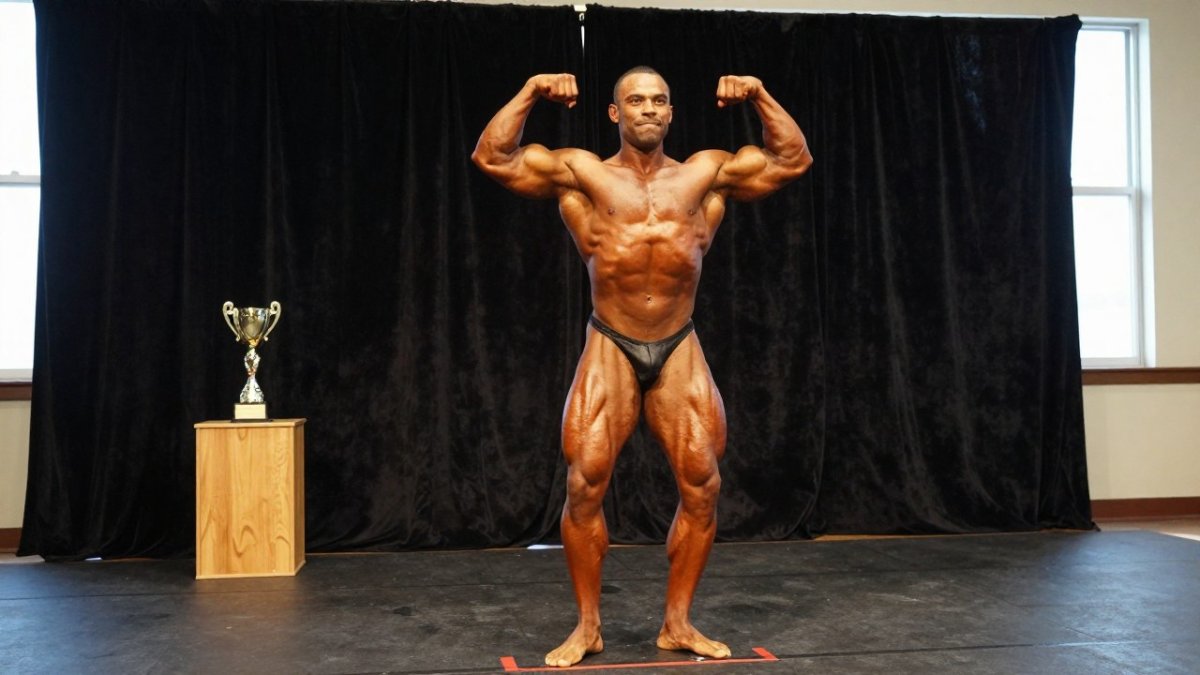
Darin Starr
Here is how the classification usually works across men's divisions:
Men's Physique: Athletes are split into height classes, typically in two-inch increments (for example, up to 5'4", 5'4"-5'6", 5'6"-5'8", and so on). There is no weight cap within a class.
Classic Physique: Height classes are paired with a maximum weight allowance that scales with height. The taller the class, the higher the weight ceiling, which rewards a balanced, proportional build rather than pure size.
Open Bodybuilding: Weight classes (bantamweight through super heavyweight) are common, and some events also use height classes for certain age divisions.
Age divisions: Teen, junior, novice, and masters categories are usually subdivided by height or weight as well, so a masters athlete is matched against competitors of similar stature.
Watch Out Height and weight limits vary by federation and by event, and they can change from season to season. Always check the current rulebook for your specific show before you pay your entry fee. If the numbers are unclear, ask the event organizers to confirm your class in writing.
Check the official rulebook for each event's height and weight limits before you choose a show.
The table below summarises how each division's height and weight classification works, as described above.
Division | Classification | Weight rule |
Men's Physique | Height classes, two-inch increments | No weight cap within class |
Classic Physique | Height classes | Maximum weight rises with height |
Open Bodybuilding | Weight classes, bantamweight to super heavyweight | Weight class sets the limit |
Age divisions | Subdivided by height or weight | Matched to similar stature |
Classic Physique vs. Open Bodybuilding
Classic physique sits between men's physique and open bodybuilding in general terms. Confirm the exact criteria for each class in the current WPF USA rulebook.

Pick the division that matches your build and your goals. Switching later is possible, but each change means a new round of prep.
Age Categories: Teen, Junior, Novice, and Masters
Age groups keep competition fair across life stages. WPF USA offers categories for competitors from youth divisions up to Grand Masters 65+.
Psychological Readiness and the Real Cost of a First Show
Most guides stop at the stage. This section covers what the top-ranking rulebooks and coaching pages leave out: the mental toll of prep and the real money it takes to step on stage. Plan for both as carefully as you plan your training.
The mental side of prep
A first show often feels harder than people expect. Stage nerves, strict diet rules, and long training weeks can wear down even disciplined athletes. A common pattern is a motivation dip around weeks 6 to 8 of prep, when the novelty fades but the finish line is still far away.
A few mechanisms help:
Set process goals, not just outcome goals. Track weekly conditioning photos, strength retention, and sleep quality instead of fixating on placings.
Schedule a weekly check-in with a coach or training partner. An outside set of eyes catches burnout before it becomes a missed show.
Protect sleep and social contact. Prep diets are already stressful; isolation makes the last weeks harder than they need to be.
Decide your exit criteria in advance. Know the conditions under which you would withdraw (injury, illness, unsafe body-fat levels) so the decision is not made in a depleted state.
Many coaches suggest a structured prep period of about 12 to 16 weeks. This gives you time to build conditioning without rushing the process. Shorter timelines can work for some athletes, but they leave less room for mistakes and tend to amplify the mental strain.
The real cost of a first show
Registration fees are only the first line item. The hidden costs of competing are what surprise most first-timers, and they add up quickly. Costs depend on the event, the division, and where you live, so treat the categories below as a budgeting framework rather than a fixed quote.
Registration and federation fees: Entry fees plus any annual membership or athlete card required by the federation.
Posing suit or board shorts: Men's physique competitors need federation-approved board shorts; classic physique and bodybuilding competitors need posing trunks. Expect to buy more than one pair.
Stage tanning: Competition spray tanning is typically a multi-session package in the days before the show, and it is rarely optional under stage lights.
Coaching and prep: If you hire a prep coach, this is often the largest single line item across the whole prep.
Travel and lodging: Host hotels, flights or fuel, and meals for you and anyone traveling with you.
Backstage supplies: Posing oil, resistance bands for the pump-up area, snacks, and touch-up tanning products.
Photography and video: Many athletes budget for stage photos, which are sold separately by event photographers.
Pro Tip Build your budget before you register, not after. Add up the categories above, then add a contingency buffer for the items you did not anticipate. A realistic budget prevents the financial stress that derails more first preps than training does.
Ask yourself these questions before your first show:
Can I stick to a strict diet for three months?
Do I have time for daily training and recovery?
Can I afford the entry fee, travel, tanning, and attire without borrowing?
Am I ready to be judged in front of a live crowd?
Do I have a plan for what happens after the show?
After the show: the part nobody prepares you for
Post-show transition is where many first-time competitors struggle most. After months of structure, the sudden absence of a plan can lead to rebound eating and lost motivation. A reverse diet, in which calories are raised gradually over several weeks, is the common approach to restoring metabolism and training quality without rapid fat gain. Plan your first two weeks after the show before you step on stage, and schedule a check-in with your coach or a trusted training partner for the week after.
Choosing Your Division and Registering With WPF USA
Start by matching your build to a division. Compare your proportions, height, and training goals against the criteria above. Then pick a show that offers that category and fits your schedule.
To sign up, review the competition rules on the event page, submit your registration before the deadline, and confirm your division and weight class with the organizers. Many first-time competitors find it helpful to talk with experienced athletes or coaches before they register.
WPF USA also offers youth scholarships and cash prizes. Check the WPF USA website for current details.
Ready to move forward? Subscribe to stay informed about upcoming WPF USA competitions.
Frequently Asked Questions
What bodybuilding category should I compete in?
Start with the division whose physique standards match your build and training goals, then confirm the entry rules for that class with WPF USA before registering. Athletes who are lean and muscular with a tapered build often fit men's physique, while those carrying more mass and with a fuller muscular presentation may fit open or classic categories. If you are unsure, ask a WPF USA official which division your current body type fits best. A short conversation before you pay an entry fee can save you a wasted season and a disappointing first stage appearance.
What is the difference between men's physique and classic physique?
Men's physique and classic physique differ in muscle size and proportion standards. Review the current WPF USA rulebook to confirm the exact criteria for each class before you commit to one.
Are there height or weight limits for men's bodybuilding categories?
Limits vary by division and event and can change, so check the current WPF USA rules for the exact weight class tables. Compare your weight against the published limits early in your preparation.
What do judges look for in men's physique competitions?
Judging criteria differ by division. Study the current WPF USA judging guidelines to understand how each element is weighed.


Comments