

7 Stages of a Bodybuilding Competition, Step by Step

Last Updated: November 1, 2026
Quick Summary
A bodybuilding competition is a structured event where athletes are judged on muscle size, conditioning, symmetry, and stage presentation. The day usually runs as a daytime prejudging session followed by an evening finals show, with a break in between.
Check-in confirms your division and class, requires photo ID, and issues a competitor number.
Time your backstage pump-up to your class call, not to the start of the show.
Prejudging is where most actual judging happens, often open to spectators on a separate ticket.
Finals bring comparison rounds where top athletes stand side by side.
Judges rank athletes against each other in each round rather than adding up fixed scores.
Table of Contents
What Happens at a Bodybuilding Competition: A Walkthrough From Check-In to Awards
Bodybuilding Competition Day Schedule: From Athlete Check-In to the Stage
Bodybuilding Prejudging and Finals: How Comparison Rounds Work
Bodybuilding Competition Judging Criteria and How Scores Become Placings
What to Bring to a Bodybuilding Competition: A Show-Day Checklist
What Happens at a Bodybuilding Competition: A Walkthrough From Check-In to Awards
A bodybuilding competition is a structured event where athletes are judged on muscle size, conditioning, symmetry, and stage presentation.
The day follows a predictable path. Athletes check in, get their numbers, warm up, step on stage for judging, and then wait for results.
Here is the short version:
Check-in: Registration, weigh-in where required, and number assignment
Warm-up: Backstage posing and pump-up in a crowded, timed space
Prejudging: Judges review athletes in their class, usually in a group
Comparison rounds: The top athletes are called back for side-by-side evaluation
We cover each stage in detail below, plus what to bring and how to plan a first show.
Bodybuilding Competition Day Schedule: From Athlete Check-In to the Stage
A bodybuilding competition is really two events in one day: a daytime prejudging session and an evening finals show. Understanding that split is the single most useful thing a first-timer can know, because it explains why athletes disappear for hours and why the audience often arrives to an empty stage.
Here is a realistic hour-by-hour flow for a typical amateur show. Exact times vary by federation and by the number of entries, but the sequence is remarkably consistent.
Morning: Check-In and Registration
Most shows open check-in before the first class is called. Athletes typically confirm their division and class, show photo ID, and receive a competitor number.
A common mistake is arriving late and missing the check-in window. Many federations close registration well before the first class is called, and a missed check-in can mean a scratched entry.
Watch Out Check-in windows can close firmly. If your federation publishes a cutoff time, treat it as a deadline.
Late Morning: Backstage Warm-Up
After check-in, athletes move to the backstage area. This is where warm-ups happen, usually with limited space and a tight timeline.
Warm-up is not casual stretching. Athletes time their pump-up so that blood flow peaks roughly when their class is called.

Midday: Prejudging
Prejudging is the first formal judging round and usually runs through the late morning and early afternoon. Judges watch each class as athletes walk and pose on stage. They look at the whole physique and make an initial read on who stands out. This session is often open to spectators, sometimes for a separate ticket, and it is where the bulk of the actual judging happens.
Afternoon: The Break
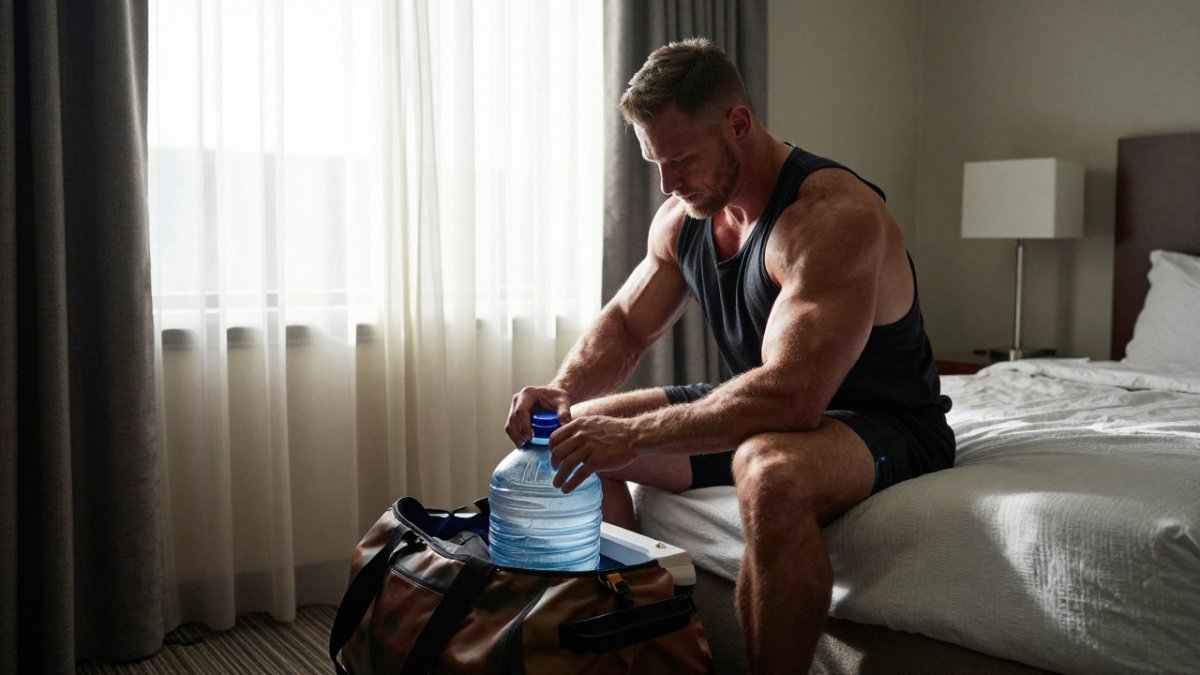
Between prejudging and finals there is typically a break. Athletes use it to eat, rehydrate, rest, and touch up tan. Spectators often leave the venue and return for the evening show. This break is why the finals lineup can look different from the prejudging lineup: fatigue, food, and pump management all shift in that window.
Evening: Finals
Finals typically start later in the day. The judges pull a smaller group back for comparison rounds, where athletes stand side by side. Individual posing routines usually run during finals rather than prejudging. This is the session most audience members attend, and it is the one with the most stagecraft: lighting, music, and emcee commentary.
End of Night: Awards
Placings are announced class by class, trophies or prizes are handed out, and overall winners are named. Many shows also recognize division champions and qualify athletes for higher-level events.
Pro Tip If you are a spectator, confirm whether your ticket covers prejudging, finals, or both. Many venues sell them separately, and the daytime session is where the real judging happens.
What This Means for Your Planning
Competitors: Arrive 90 minutes early, know your class number, and time your pump-up to your call time rather than to the start of the show.
Spectators: Expect a long day if you attend both sessions, and plan meals around the afternoon break.
Everyone: Schedules slip. Build a buffer of at least 30 minutes around any published start time.
The day splits into a daytime prejudging session and an evening finals show, with a break in between.
Stage | When | What happens |
Check-in | Morning | Confirm division, show photo ID, receive number |
Backstage warm-up | Late morning | Pump-up and posing in a crowded, timed space |
Prejudging | Midday | Judges make an initial read on each class |
Break | Afternoon | Athletes eat, rehydrate, rest and touch up tan |
Finals | Evening | Comparison rounds, individual routines and placings |
Awards | End of night | Placings announced, trophies and prizes handed out |
Bodybuilding Prejudging and Finals: How Comparison Rounds Work
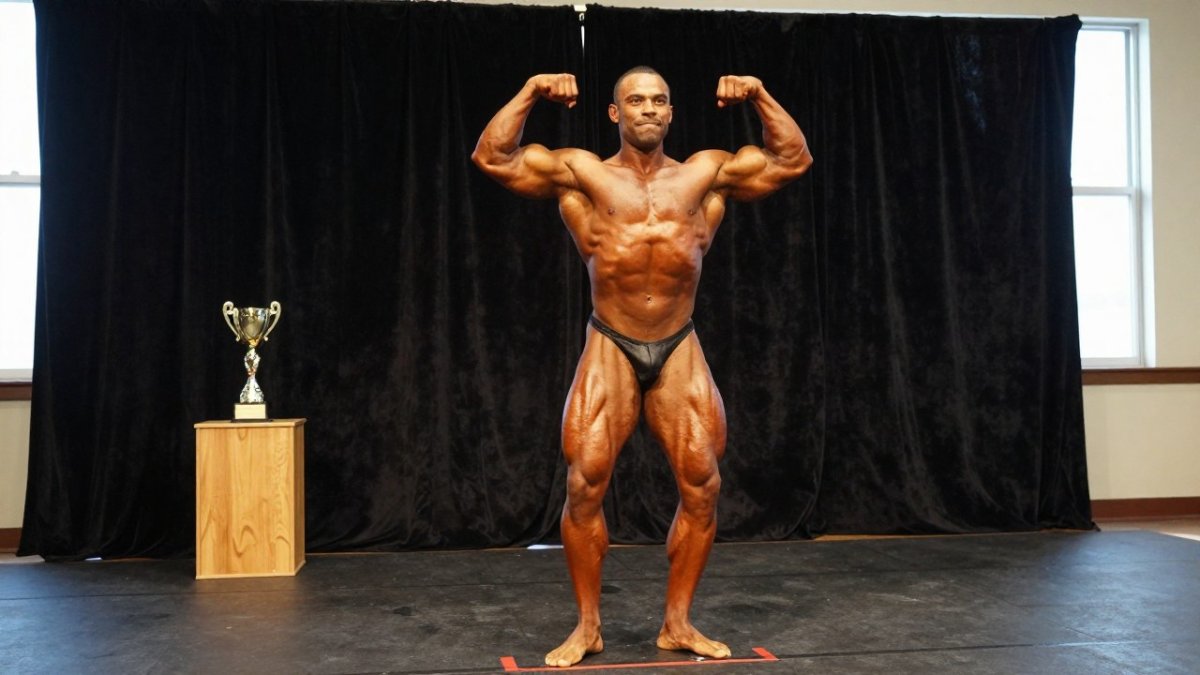
Prejudging is the first formal judging round. Judges watch each class as athletes walk and pose on stage. They look at the whole physique and make an initial read on who stands out.
Julia Rene
Finals come after prejudging. The judges pull a smaller group back for comparison rounds, where athletes stand side by side. This is where small differences in conditioning and proportion become decisive.
Mandatory Poses and Quarter Turns
Mandatory poses are the standard positions judges ask every competitor to hold. Athletes typically show front and back poses, along with side poses.
Practice these before the show. A simulated contest prep session lets you work on them in a small group setting. Hitting clean, held poses without wobbling makes a visible difference during comparisons.
Individual Posing Routines
Individual routines let athletes show their own style. Routines usually run to music and last a set amount of time. Coaching on mandatory poses, music choice, and stage demeanor can help you refine your routine.
Watch out: an overlong or cluttered routine can cost you attention. Keep the routine tight and focused on your strongest muscle groups.
Bodybuilding Competition Judging Criteria and How Scores Become Placings
Most coverage of bodybuilding judging stops at a list of criteria. That leaves the obvious question unanswered: how does a panel of judges turn a lineup of physiques into a first, second, and third place? This section walks through the mechanics in plain language.
The Core Criteria
Judges compare athletes on several core criteria:
Muscle mass: Size and fullness of the muscle groups
Conditioning: Visible definition and low body fat
Symmetry and proportion: How well the parts of the physique balance
Stage presentation: Posing, confidence, and control
Different divisions weight these criteria differently. A division that emphasizes size will reward mass more heavily, while an aesthetic-focused division will punish a competitor who sacrifices proportion for bulk. Check your division's rules before you train around a single criterion.
How Judges Actually Rank
Judges do not add up points in a formal sum. Instead, they rank athletes against each other in each round. Each judge produces an ordered list, and those lists are combined to produce placings. A strong performance relative to the field matters more than a single absolute score, which is why a competitor can look better than last year and still place lower against a deeper class.
What Happens in Comparison Rounds
Comparison rounds are where placings are effectively decided. Judges call athletes back in groups and ask them to hit mandatory poses side by side. This is where small differences in conditioning and proportion become decisive, because the judges are no longer evaluating each athlete in isolation but against direct neighbors.
A common pattern is that the top three or four athletes are rotated through the center of the lineup so judges can compare them from every angle. If you are watching from the audience, the athlete who keeps getting moved to the middle is usually the one the panel is seriously considering for first.
Ties and Callouts
Ties do happen, and federations handle them differently. Some break ties by comparing the judges' individual rankings; others use a head judge's call or a final pose-down. The practical takeaway for competitors is that every round matters, because a tie can be decided by a single judge's placement in an earlier round.
From Placings to Awards
Once rankings are combined, placings are set class by class. Awards are announced in order, with trophies or prizes for the top finishers and often an overall winner across classes. Many shows also use placings to qualify athletes for higher-level events, so a placing is not just a trophy: it can be a pathway.
Key Takeaway Judging is comparative, not absolute. You are not scored against a standard; you are ranked against the people on stage with you. That is why the same physique can place differently in two different shows.
What This Means for Competitors
Peak for the comparison, not the routine. The side-by-side lineup is where placings are decided.
Practice mandatory poses until they are automatic. Wobbling or drifting in a held pose reads as poor conditioning even when the physique is strong.
Know your division's weighting. Training around the wrong criterion is one of the most common first-show mistakes.
Amateur vs. Professional Shows and Division Differences
Amateur shows are usually the entry point. They often have lower entry fees, more divisions, and more first-time competitors.
Divisions also differ. Some categories emphasize size, while others emphasize aesthetics and proportion. Check the rules for your specific class before you register.
WPF USA offers categories for all ages, from youth divisions to Grand Masters 65 and older.
What to Bring to a Bodybuilding Competition: A Show-Day Checklist
Registration confirmation and photo ID
Competition suit, trunks, or specified attire
Posing suit backup and extra straps or tape
Music file on a labeled USB drive
Tanning products, oils, and wipes as allowed
Pack the night before. Last-minute scrambling eats into warm-up time you cannot get back.
Planning Your First Show With WPF USA
First-time competitors often ask how to prepare without wasting time or money. Start by picking a show and a division that fit your current stage of development. Then plan your prep timeline working backward from the show date.
For current options, visit WPF USA's website. For a full picture of what contest preparation involves, read about the contest preparation program. If you are still deciding which class suits you, Men's Physique competition categories explained breaks down how that division differs from the others.
Frequently Asked Questions
Does it cost money to enter a bodybuilding competition?
Yes. Most shows charge an entry or registration fee, and athletes may also pay for federation membership, travel, lodging and stage-ready attire. Exact amounts vary by federation, event and division, so check the registration details for the specific show. For current fees and pricing, contact WPF USA directly or visit its website, since pricing depends on the event, the division you enter and any membership requirements. Budgeting for these costs before you register helps avoid surprises on show day.
How long does a bodybuilding competition usually last?
Most bodybuilding competitions run most of a day, often from early morning check-in through the evening awards. Much of that time is spent waiting: athletes check in, undergo weigh-ins or pre-judging in their divisions, and wait for their call to the stage. The finals and awards usually come last. Plan to arrive early, bring food and water, and expect the schedule to shift from event to event.
What should a first-time competitor bring to a bodybuilding show?
Bring your registration confirmation, a valid ID, your posing trunks or suit, a backup suit, stage-ready tanning or makeup if your federation allows it, and any required paperwork. Pack a bag with water, snacks, a towel, safety pins or tape, and comfortable clothes for waiting. A first-time athlete should also review the rules for their division and arrive early enough to check in without rushing.
How does judging work at a bodybuilding competition?
Judges compare athletes within each division on criteria such as muscle mass, conditioning, symmetry, proportion and stage presentation. In prejudging, athletes perform mandatory poses and quarter turns so judges can compare physiques side by side. Finalists then move to a posing round, and placings are assigned based on the judges' overall comparison. Each federation publishes its own judging guidelines, so review them before you compete.

Comments